In a recent article, the Economist picked up on the results of a replication study in experimental economics, published in Science. It favorably compares experimental economics to other experimental disciplines, giving high grades for economics’ performance. Way to go, experimental economics!
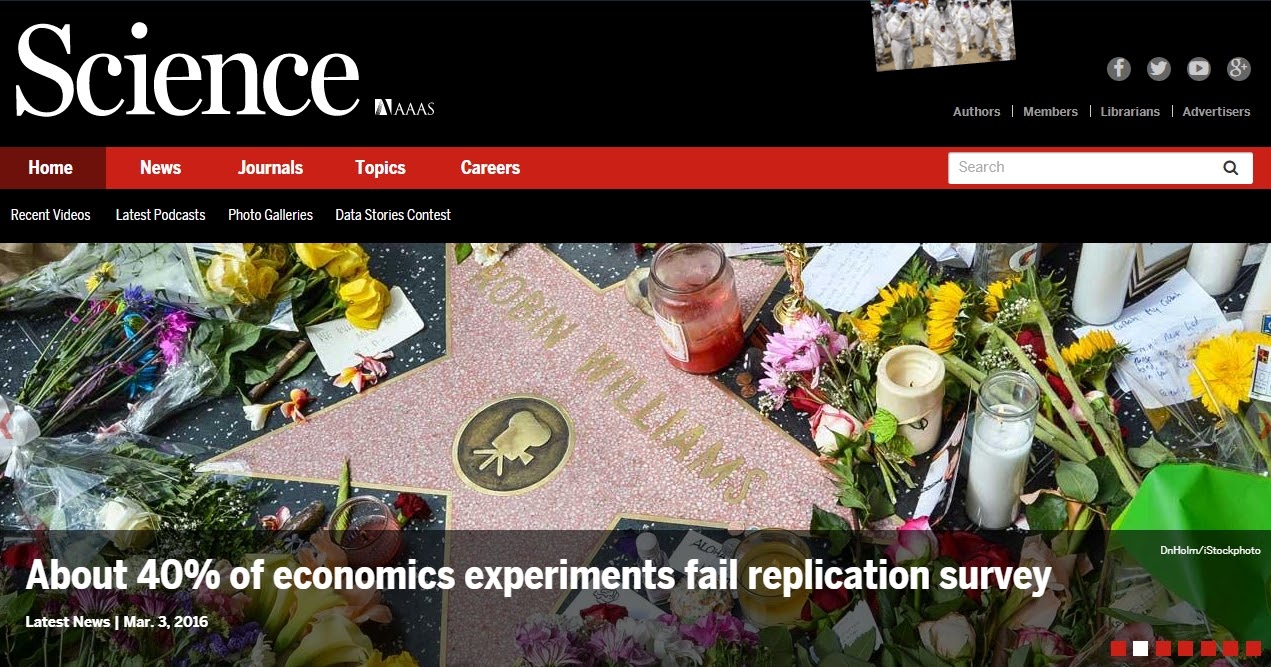
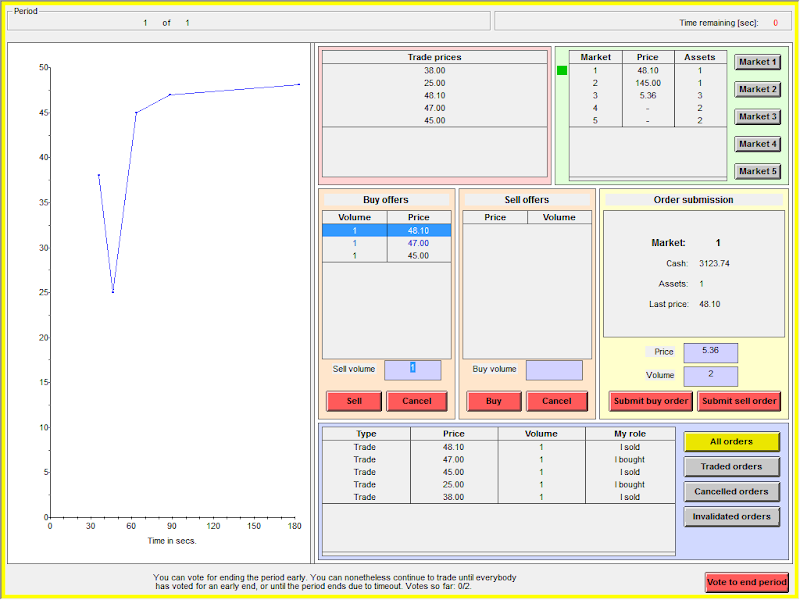
Since its publication in 2015, my asset market software GIMS (“Graz-Innsbruck Market System”) has been downloaded several times and I have helped a number of researchers get started using it. Despite the interest, however, no study using GIMS had been published prior to today, leading me to fret a little bit about the delay between GIMS’ publication and the appearance of studies utilizing it (my own first papers using GIMS are also still under preparation). Now however I am proud to announce that a recent paper in Science, titled “Evaluating replicability of laboratory experiments ineconomics” is the first paper to be published reporting results obtained using GIMS. In this paper, my colleagues from the University of Innsbruck, Felix Holzmeister, Jürgen Huber, Michael Kirchler, and Michael Razen (with co-authors) study how well economic experiments replicate. They find that some 61% out of a set of 18 studies published in American Economic Review and Quarterly Journal of Economics in 2011 through 2014 replicate in their study, which uses a 90% power level to detect the original effect. Congratulations on this great and – from the view of the discipline – important paper, and thanks for using GIMS!
I am pleased to announce that the website of the Finance Research Platform Graz (FiRe) is now online under http://www.finance-graz.net. Let me know what you think and of course get in touch if you want to attend platform events or are thinking of possible cooperation projects!
This week was the first time our newly appointed research Professor, Erik Theissen, who normally works at the University of Mannheim, joined us in Graz. Prof. Theissen has a five-year appointment at the University of Graz and will visit us about once a quarter to work on joint research. After he presented his own research agenda on Tuesday, Wednesday marked the first “Research Day” of the Finance Research Platform. We heard six great presentations and had animated discussions about different research approaches, study designs, motivations, and publication strategies. Overall, the participants’ feedback was very positive and we created momentum which we will carry over into our research work. I wish to thank all the participants for their presentations and their input into the discussion! I also look forward to Prof. Theissen’s next visit (December) and our next research day (probably February).
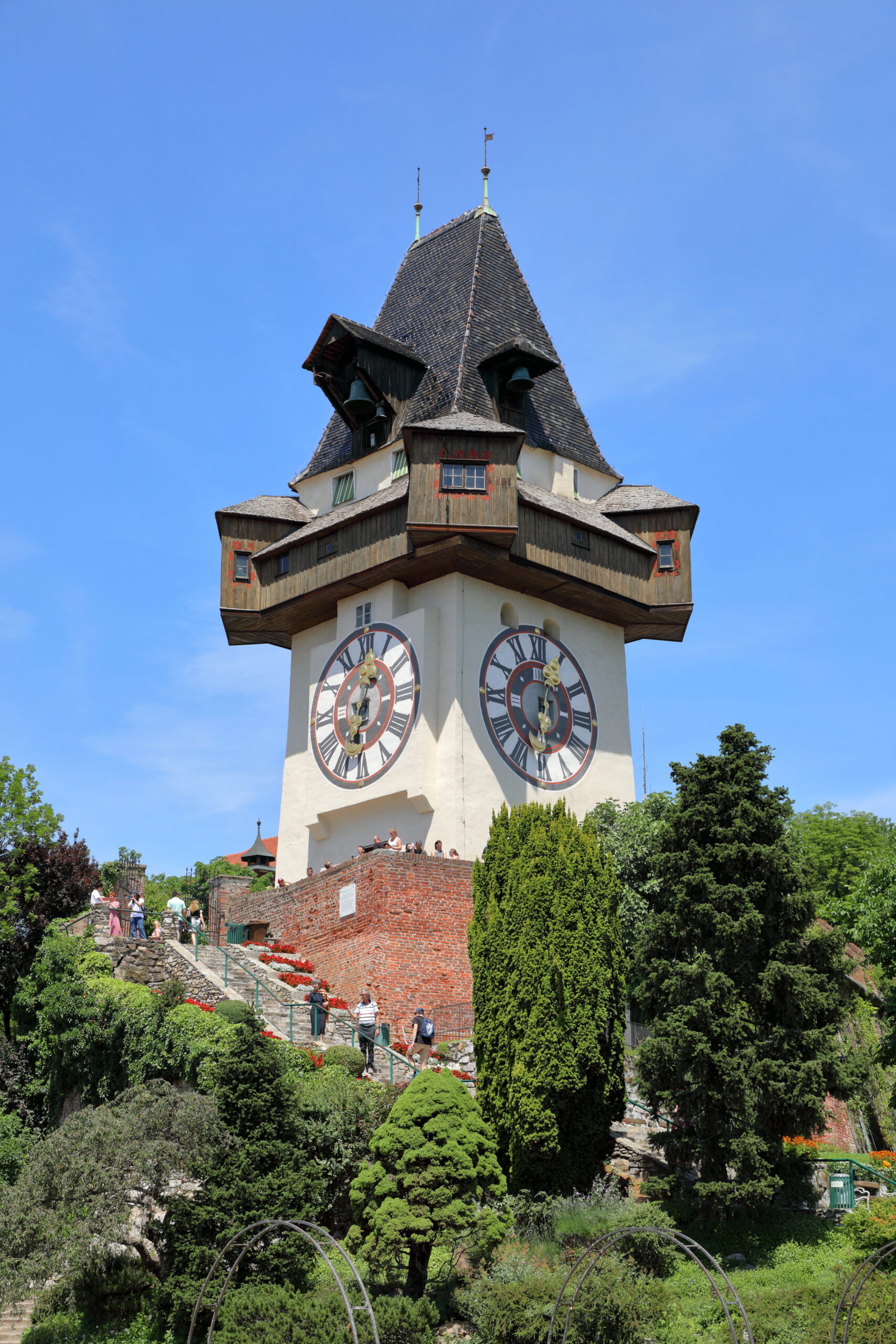
I just created a map for a colleague who will be visiting Graz and was asking for directions for a stroll around town. If you are also thinking of visiting Graz – feel free to follow my suggestions!
I recently stumbled over a Prezi I created a while ago to present my 2012 Experimental Economics paper co-authored with Stephen Cheung. Have fun checking it out! Cheung, S. L., Palan, S., 2012. Two Heads are Less Bubbly than One. Team Decision-Making in an Experimental Asset Market, Experimental Economics 15(3), 373–397, DOI: 10.1007/s10683-011-9304-6.
I have just posted the latest version of my free, open-source asset pricing program GIMS. Version 7.2 supports trading in multiple markets/assets and offers a new results screen for the sealed bid-offer call auction practice period. If you are interested, check out my GIMS download page, where you can find the software including all documentation. Do not hesitate to mail me with questions and feedback!
I was recently made aware that my article in the Journal of Economic Surveys has been highly ranked in a number of categories. See the Altimetric patch to the right for details. Thanks to all readers and citers, and a special thanks to Charles Noussair and Steve Tucker for editing the special issue this article was published in! Palan, S., 2013. A Review of Bubbles and Crashes in Experimental Asset Markets, Journal of Economic Surveys 27(3), 570–588, DOI: 10.1111/joes.12023.



![Scary news about scientific integrity [German]](https://stefanpalan.com/wp-content/uploads/2026/08/die-zeit-logo.webp)
.JPG)