Stefan Palan

spalan

  • New paper on retail investors’ disposition effect and order choices

    New paper on retail investors’ disposition effect and order choices

    Together with my co-authors Rudy De Winne and Nhung Luong (both UCLouvain), we examined how retail investors’ disposition effect — the well-documented tendency to sell winning investments too readily and hold on to losing ones too long — shows up not just in whether investors sell, but in how they place their sell orders. We first ran a controlled lab experiment to obtain a clean, mechanically unbiased measure of each participant’s disposition effect, then combined this with a large dataset of real trading records from a Belgian online broker spanning 2003–2021. We find that investors with a strong disposition effect submit relatively more sell orders when positions are at a gain, and that in the loss domain they set limit prices closer to (or above) their purchase price, place these limits farther above the prevailing market price, and rely more on good-till-canceled instructions — all consistent with a reluctance to lock in losses. Our results suggest that the disposition effect is reflected not only in transaction data but also in the way investors structure the orders that lead to those transactions.

    I’m particularly proud of this one for how it ties together the experimental and empirical parts: the lab study gives us a causally clean benchmark for who is prone to the disposition effect, and the brokerage data lets us show the same pattern holds up at scale, in real markets.

    One more thing makes this publication special to me: it’s the first paper I’ve had published in the Journal of Behavioral and Experimental Finance in the nearly nine years I’ve served as its Co-Editor-in-Chief. Needless to say, the entire review process was handled independently by my co-editor — as an author with a conflict of interest, I was blocked from accessing the manuscript in the editorial system throughout.


    Link to the paper (open access)

  • Instagram series on peer review and publishing

    Instagram series on peer review and publishing

    The University of Graz’ “7. Fakultät” has recently asked me to participate in a series of Instagram posts explaining peer review, publishing, and how scientific findings are shared. Aimed at a general public, the 7. Fakultät serves the university’s mission to spread research insights and help explain the university’s and science’s role in knowledge generation and in promoting societal progress at large. In the first part of the series, I talk about how peer review works.

  • Talk about the (non-)participation in the stock market

    Talk about the (non-)participation in the stock market

    Austrian retail stock market participation (i.e., the proportion of the population that owns stocks or equity funds), while growing substantially recently, is still relatively low, with unfavorable consequences for Austrians’ disposable income and wealth particularly in retirement. To help address this issue, I was recently asked to give a talk about the motives for, and obstacles preventing, investment in the stock market among Austrian retail investors. Speaking in front of senior retail bankers, I reported on recent research showing that non-investors overestimate the expertise required to participate in the stock market, and that a majority believes such investment requires at least weekly checking on one’s brokerage account.

  • White house report mentions research

    White house report mentions research

    As I was recently made aware, a 2024 report by the White House Office of Science and Technology Policy cites my paper “Nobel and novice: Author prominence affects peer review” (joint work with Jürgen Huber, Sabiou Inoua, Rudolf Kerschbamer, Christian König-Kersting and Vernon Smith). The Biden administration report highlights efforts to enhance data accessibility and discusses the importance of establishing robust peer review systems for data to ensure its credibility within the research community. The report references our study in the context of discussing biases in the peer review process.

  • Honorary membership

    Honorary membership

    In its 2025 general assembly, the Society for Experimental Finance named me its Honorary Member. I am very grateful of this recognition – an honor that I now share with Nobel prize laureate Vernon Smith and the two founders of the society, Jürgen Huber and Michael Kirchler. The Society for Experimental Finance is an association of academic researchers in experimental finance. It was founded in 2013 and today has around 500 members, and it was my honor to serve it first as Secretary (2013-2018) and then as Managing Director (2021-2025).

  • Grant for studying the role of gender and sexuality in financial decision-making

    Grant for studying the role of gender and sexuality in financial decision-making

    My joint grant application with Berivan Gürel (University of Graz) titled “Gender and Sex Dynamics in Financial Behavior – Experimental Evidence” has received nearly €300k funding from the Austrian Central Bank’s (OeNB) Anniversary Fund. The project will generate insights into the interactions between gender/sex on the one hand, and risk perception, risk preferences, and risk-taking on the other hand. Helena Fornwagner (University of Exeter Business School), an Associate of the Austrian Institute of Economic Research (WIFO), Felix Holzmeister (University of Innsbruck) and Julia Rose (Erasmus School of Economics) are the cooperation partners of this project. I look forward to sharing results with you!

  • fit2invest financial education game online

    fit2invest financial education game online

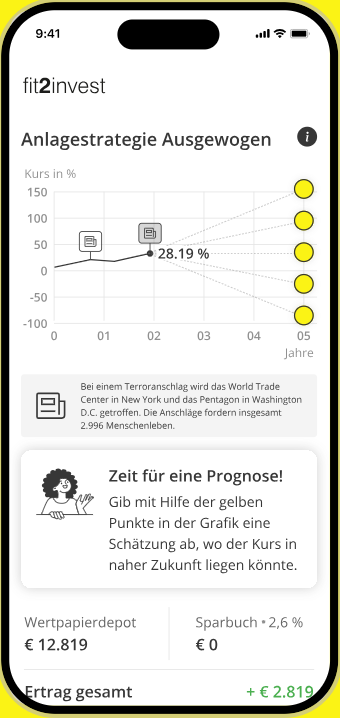
    Together with Raiffeisen-Landesbank Steiermark AG, I spent the past year developing the financial education game fit2invest. Publicly available under fit2invest.at, the German-language game takes players back to sometime in the last 50 years of mark history and lets them experience (and make decisions in) the stock and bond markets. Players have to dynamically shift their investments between the markets and a savings account and only at the end of the game learn which time period they just experienced. Once the players have played the game at least once, they get access to the “training area” in which users can learn about such diverse finance topics as diversification, inflation, the effect of time on investment success, etc. While the game currently addresses the general public as its audience, we are currently working on an education version, which teachers will be able to use in class to teach investment-related topics to their pupils.

  • New paper on insider trading regulation

    New paper on insider trading regulation

    Along with my co-authors Dominik Schmidt and Thomas Stöckl, we examined traders’ regulation preferences conditional on their prospects of becoming informed. Our findings reveal that traders voted against regulation in 64% of referenda. Moreover, traders’ prospects of becoming informed significantly impacted the outcomes of the referenda. Individual votes reveal that traders who know they will remain uninformed support regulation in 69.27% of the cases, while informed traders do so only 8.33% of the time. Traders who may or may not become informed support regulation 33.33% of the time. Link to the paper (open access)

  • New video about non-standard errors

    New video about non-standard errors

    The team behind a recent Journal of Finance paper has posted a video explaining the concept of non-standard errors. This is a vital piece of research for researchers across all fields, and I highly recommend giving it a watch. The video provides a succinct explanation of non-standard errors. In contrast to standard errors, which represent the variability in statistical estimates when samples are randomly drawn from a population, non-standard errors occur when different research teams analyzing the same sample make diverse decisions along the analysis path, leading to variability in estimates. In an experiment involving 164 research teams that I was a part of, we demonstrated that non-standard errors are at least as large as standard errors. This highlights the dual sources of uncertainty in any given estimate: standard error (variability with different samples) and non-standard error (variability with different teams analyzing the same data). Visit https://nonstandarderrors.com/ for further information and the video.

  • Paper on sustainable investments

    Paper on sustainable investments

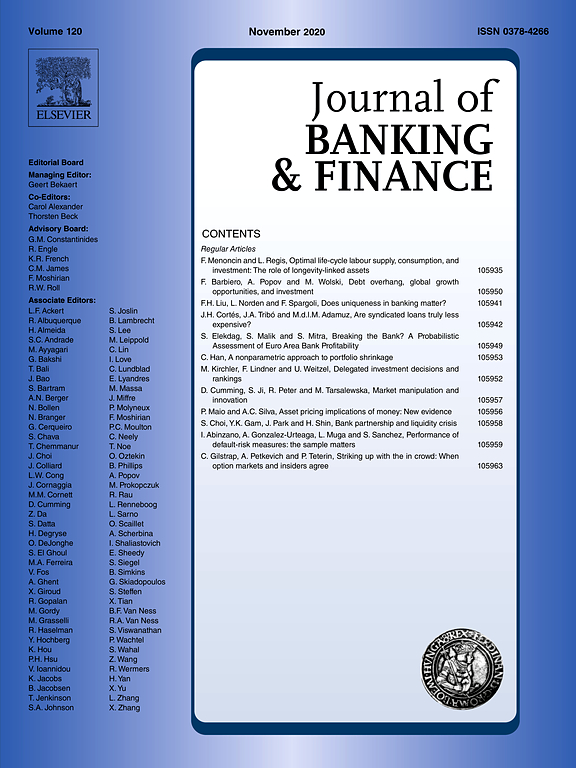
    Together with researchers from Vienna, Stavanger and Brussels, I recently published a paper titled “Can information provision and preference elicitation promote ESG investments? Evidence from a large, incentivized online experiment” in the Journal of Banking and Finance. We study the role that providing information about financial returns and environmental, social, and governance (ESG) impacts plays in influencing investors’ decisions towards sustainable investments. Our research reveals that both financial return information and ESG impact information stimulate investors towards ESG investments. Interestingly, combining these two types of information does not enhance the effect beyond presenting either one alone. This insight is crucial for financial advisors and institutions looking to promote ESG investments among their clients, as it suggests a targeted approach to information provision can be effective. Link to the paper (open access)